

Ceramic Kiln Market Outlook 2025–2035: Technology, Sustainability, and Market Expansion

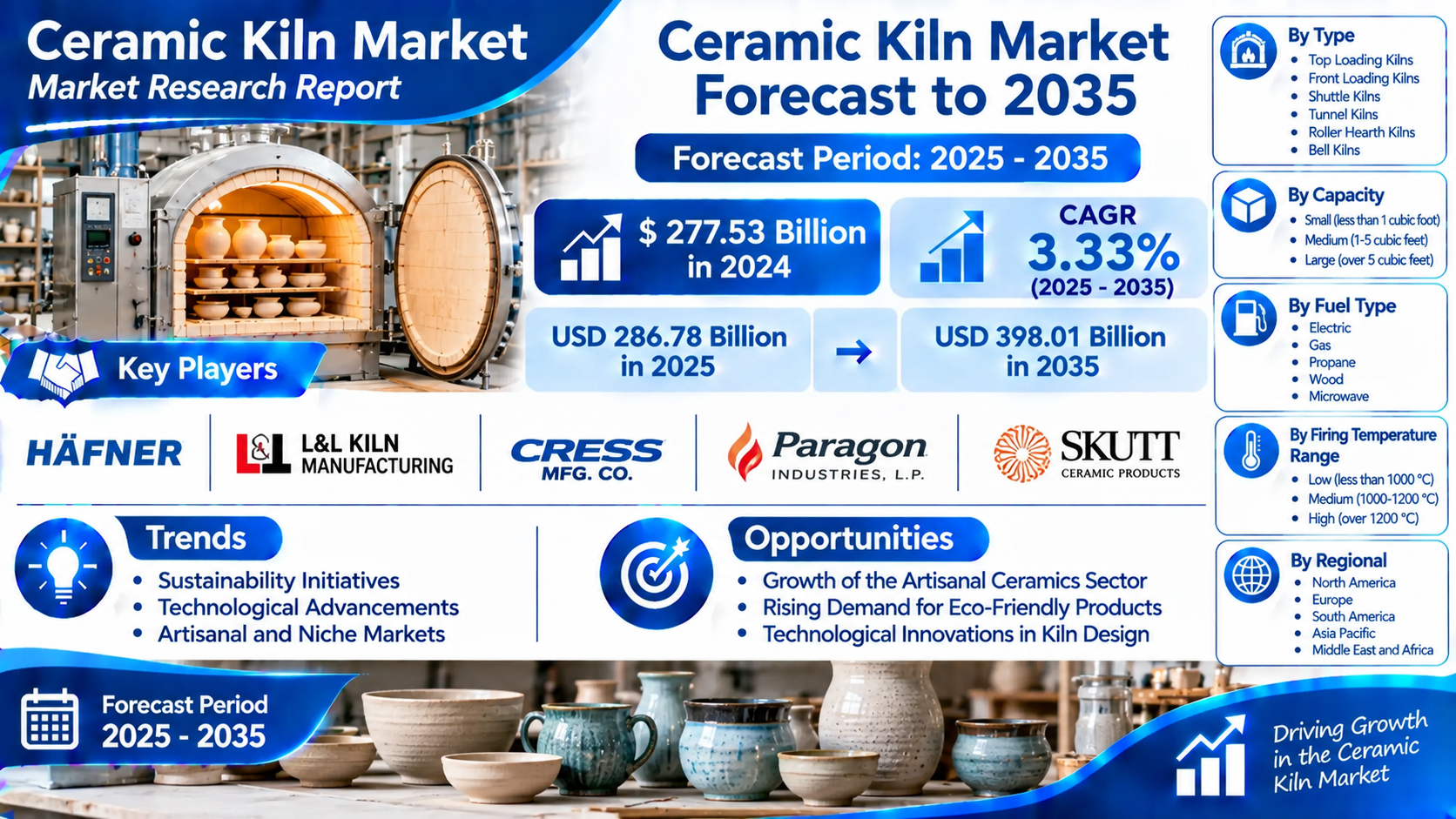
According to Market Research Future® (MRFR), the Ceramic Kiln Market is projected to increase from USD 286.78 billion in 2025 to USD 398.01 billion by 2035, registering a compound annual growth rate (CAGR) of 3.33% during the forecast period from 2025 to 2035. The market was valued at USD 277.53 billion in 2024. Demand for ceramic kilns is influenced by the requirements of ceramic production, the continued presence of artisanal manufacturing, and interest in equipment that supports improved firing performance and more sustainable operations. Developments in kiln technology and the growing demand for eco-friendly products are also creating opportunities for manufacturers.
Ceramic Kiln Market Overview
Ceramic kilns are specialized heating systems used to fire ceramic materials and achieve the properties required in finished products. Kiln selection depends on production scale, available fuel, firing temperature, operating requirements, and the type of ceramic work being undertaken. The market serves a range of users, from smaller-scale ceramic producers and artisans to operations requiring larger-capacity equipment.
The market's projected expansion reflects the continuing relevance of ceramic manufacturing and the need for equipment suited to different production environments. Kiln manufacturers compete through product configurations, capacity options, fuel compatibility, and design improvements. These factors make equipment selection an important consideration for businesses and individual producers seeking to align production requirements with operating costs and performance expectations.
Market Segmentation by Kiln Type
The Ceramic Kiln Market is segmented by type into Top Loading Kilns, Front Loading Kilns, Shuttle Kilns, Tunnel Kilns, Roller Hearth Kilns, and Bell Kilns. These categories represent different kiln configurations and production arrangements. The availability of multiple designs allows buyers to consider how equipment structure fits their workspace, material-handling needs, and firing processes.
Top Loading Kilns and Front Loading Kilns provide distinct loading arrangements, while Shuttle Kilns, Tunnel Kilns, Roller Hearth Kilns, and Bell Kilns offer additional configurations for varying operational settings. Manufacturers serving these categories need to address differences in equipment use rather than relying on a single design approach. Product selection is therefore shaped by the scale and organization of ceramic production.
Capacity and Fuel Type Shape Equipment Choices
Capacity is another important market segment, with products classified as Small (less than 1 cubic foot), Medium (1-5 cubic feet), and Large (over 5 cubic feet). This classification provides buyers with options suited to different firing volumes. Smaller kilns can serve limited-volume requirements, while medium and large equipment accommodates progressively greater capacity needs. The range enables manufacturers to address diverse customer groups without treating all ceramic production environments as identical.
Fuel type segmentation includes Electric, Gas, Propane, Wood, and Microwave kilns. Each category gives buyers a different equipment option based on their operating circumstances and preferences. Fuel availability, installation considerations, energy requirements, and the intended firing process can influence purchasing decisions. Manufacturers that offer a broad selection of fuel types can serve customers with different infrastructure and production needs.
Firing Temperature and Product Requirements
The market is also categorized by firing temperature range: Low (less than 1000 degrees Celsius), Medium (1000-1200 degrees Celsius), and High (over 1200 degrees Celsius). Temperature requirements are central to kiln selection because ceramic materials and production processes may require different firing conditions. A clear range of temperature capabilities helps buyers identify equipment that corresponds to their intended applications.
The segmentation also creates opportunities for manufacturers to develop and position products for specific operating requirements. Equipment design, temperature control, and reliability remain relevant considerations when evaluating kiln performance. Technological advancements can support improvements in these areas, helping manufacturers respond to customers seeking more capable and efficient firing equipment.
Sustainability and Technological Advancements
Sustainability initiatives are an important trend shaping the Ceramic Kiln Market. Interest in eco-friendly products is encouraging attention toward kiln designs that address environmental considerations. The rising demand for more sustainable solutions creates an opportunity for manufacturers to explore improvements in equipment design and operating efficiency.
Technological advancements represent another significant trend. Innovation in kiln design can help manufacturers respond to changing requirements related to firing processes, equipment functionality, and production needs. As buyers assess available products, improvements that support practical operation and more effective firing management can influence purchasing decisions. Artisanal and niche markets also contribute to the industry's development by maintaining demand for equipment suited to specialized ceramic production.
Regional Market Landscape
The report covers North America, Europe, South America, Asia Pacific, and the Middle East and Africa. These regional markets provide different operating environments for kiln suppliers and ceramic producers. Demand can be influenced by local manufacturing activity, the presence of artisanal ceramic businesses, investment in production equipment, and interest in sustainable products.
Regional coverage is important because customer requirements and purchasing conditions can differ across markets. Suppliers need to consider the needs of individual regions when positioning kiln types, capacities, and fuel configurations. The range of regional markets also gives manufacturers opportunities to serve both established ceramic production environments and developing areas of demand.
Competitive Landscape and Growth Opportunities
Key companies identified in the Ceramic Kiln Market include Häfner, L&L Kiln Manufacturing, Cress Mfg. Co., Paragon Industries, L.P., and Skutt Ceramic Products. These participants operate in a market where equipment selection, product range, and design capabilities are important competitive considerations.
Several opportunities are expected to support market development through 2035. Growth of the artisanal ceramics sector can sustain demand for equipment serving specialized and smaller-scale producers. Rising demand for eco-friendly products creates room for kiln designs that address sustainability priorities. Technological innovations in kiln design provide another opportunity for manufacturers to improve product offerings and respond to evolving buyer expectations.
Ceramic Kiln Market Outlook Through 2035
The Ceramic Kiln Market is forecast to grow at a CAGR of 3.33% between 2025 and 2035, reaching USD 398.01 billion by the end of the forecast period. Its development will depend on the interaction of ceramic production requirements, artisanal activity, sustainability initiatives, and equipment innovation. Manufacturers that address varied capacity, fuel, kiln type, and temperature needs will be positioned to serve a broad customer base. Continued attention to practical design improvements and eco-friendly solutions is expected to remain relevant as the industry progresses.


